Tips for Choosing Zipper Bags for Frozen Food to Prevent Bulging and Bursting
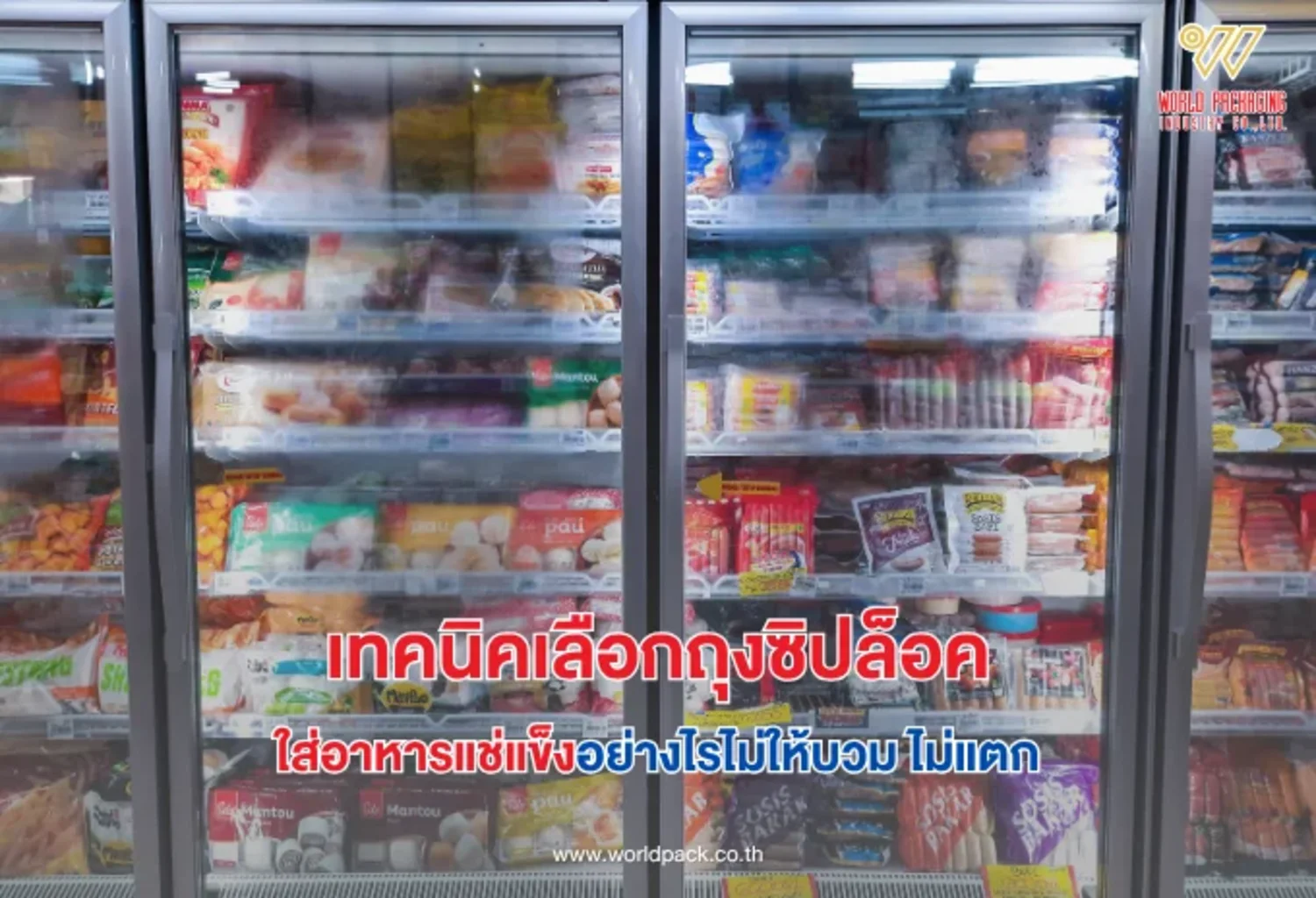
In today’s frozen food industry, one of the most common challenges faced by business owners is packaging that bulges, tears, or leaks after being stored in the freezer for extended periods. These issues not only damage the products inside but also directly affect a brand’s image and credibility.
Choosing high-quality zipper bags for frozen food that meet industry standards and match the specific requirements of each application is therefore essential. The right packaging helps ensure that products reach consumers safely and in perfect condition.
Why Do Frozen Food Bags Require Special Plastic Specifications?
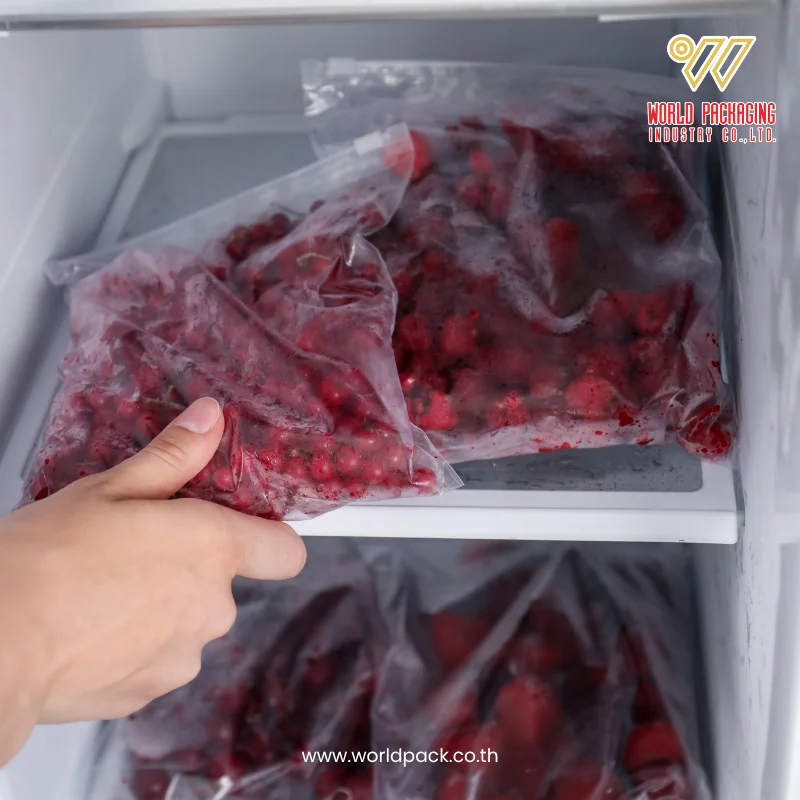
Many people mistakenly believe that any type of plastic bag can be used to package food and store it in the freezer. In reality, however, sub-zero temperatures ranging from -18°C to -40°C can significantly affect the physical properties and performance of plastic materials.
Conventional plastic bags that are not specifically designed for freezing may lose their flexibility at low temperatures. As the material becomes less pliable and more brittle, it becomes increasingly susceptible to cracking or tearing when subjected to impact or handling. Therefore, choosing frozen food bags made from specially engineered plastic films, including suitable laminated structures, is essential for protecting products under extreme freezing conditions.
Key Reasons Why Frozen Food Packaging Bulges, Leaks, or Bursts
Bulging, leakage, and bursting in frozen food packaging can result from several physical factors and packaging-related issues. The main causes include the following:
1. Expansion of Ice Crystals Inside Frozen Food
Water and moisture naturally present in food expand when they freeze and form ice crystals. This increases the volume of the contents inside the packaging. If the plastic bag lacks sufficient flexibility or does not have enough room to accommodate this expansion, internal pressure may cause the bag to bulge and potentially rupture.
2. Plastic Materials Becoming Brittle and Cracking at Extremely Low Temperatures
When conventional plastic materials are exposed to sub-zero temperatures for extended periods, their flexibility and impact resistance may decrease, depending on the material composition and grade. The plastic can become brittle and more prone to cracking. Consequently, even minor impacts or routine handling when removing the bag from the freezer may cause the packaging to tear or leak.
3. Substandard Heat Seals and Zipper Closures Failing Under Stress
During the bag-sealing process, improper heat-sealing temperatures, pressure, or dwell times can result in weak or incomplete seals. Similarly, poorly designed or improperly closed zipper tracks may compromise the package's integrity. Changes in temperature and pressure, combined with stress from handling and product expansion, can cause these weak points to separate, resulting in leakage or package failure.
How to Choose Zipper Bags for Frozen Food That Withstand Extreme Cold with Confidence
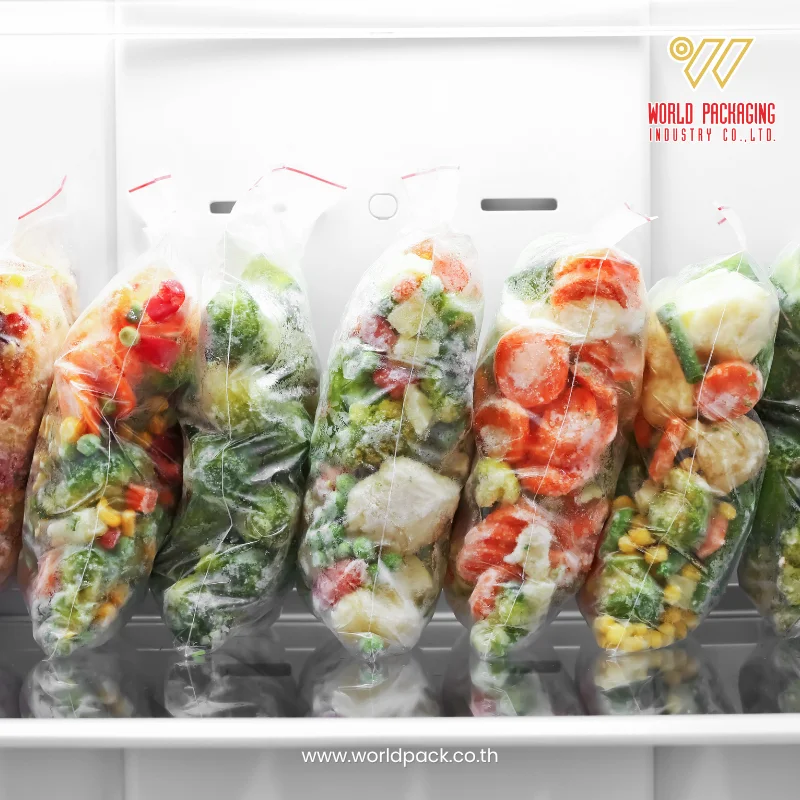
To prevent product damage, brand owners should carefully select high-quality, durable frozen food packaging that meets the specific requirements of their products. Here are some essential tips for choosing the right packaging:
1. Choose Nylon and PE Materials with High Toughness and Flexibility
For frozen food applications, consider laminated films combining Nylon (Polyamide) with LLDPE (Linear Low-Density Polyethylene). Nylon provides excellent tensile strength, puncture resistance, and performance at low temperatures, helping the packaging resist brittleness and cracking. Meanwhile, LLDPE offers excellent flexibility and toughness at the sealing edges, helping reduce the risk of tears and leaks.
2. Check the Bag Thickness to Match the Food Type and Weight
Bag thickness directly affects its ability to withstand loads, punctures, and internal pressure. For general frozen food applications, a starting thickness of 80–100 microns may be suitable. However, heavier products or foods with sharp edges, such as spiny shrimp, ribs, and shellfish, may require thicknesses of 120 microns or more to help prevent punctures. The appropriate thickness should be determined through testing under actual storage and handling conditions.
3. Choose a Secure Zipper Closure to Help Prevent Leakage and Odor Transfer
The zipper track should be manufactured with precision to ensure a secure closure that is easy to open and close. A well-designed zipper helps reduce liquid leakage and limits air exchange when properly closed. It can also help minimize odor transfer between different frozen food products stored in the same freezer. However, a zipper closure alone does not create a vacuum seal; vacuum packaging requires a suitable vacuum-sealing system.
Benefits of Using Frozen Food Bags
Investing in packaging specifically designed for frozen food applications can deliver significant benefits and long-term value for businesses.
Preserve Food Quality, Texture, and Nutritional Value for Longer
Cold-resistant laminated packaging can help reduce moisture loss and protect food quality during frozen storage. By limiting exposure to air and moisture loss, suitable packaging helps preserve flavor, texture, and juiciness. When customers thaw the products for cooking, the food can retain more of its original quality. Actual results depend on the packaging barrier properties, storage conditions, and the type of food.
Help Prevent Freezer Burn and Protect Food Quality
Freezer burn occurs when moisture escapes from the surface of frozen food, causing dry, tough patches and changes in flavor and texture. Properly sealed zipper bags designed for frozen food help limit air exposure and moisture loss, reducing the risk of freezer burn and helping maintain product quality.
Reduce Product Damage During Transportation, Lower Costs, and Build Brand Trust
Durable bags with good impact and puncture resistance can help reduce packaging failures during cold chain logistics. This helps businesses minimize damaged goods, product returns, and replacement costs while strengthening customer confidence through consistent product quality and reliable delivery.
Manufacture Food-Grade Frozen Food Packaging with World Packaging Industry
Choose packaging solutions designed to meet your product requirements, withstand low-temperature storage, and help protect your frozen food products throughout the supply chain.
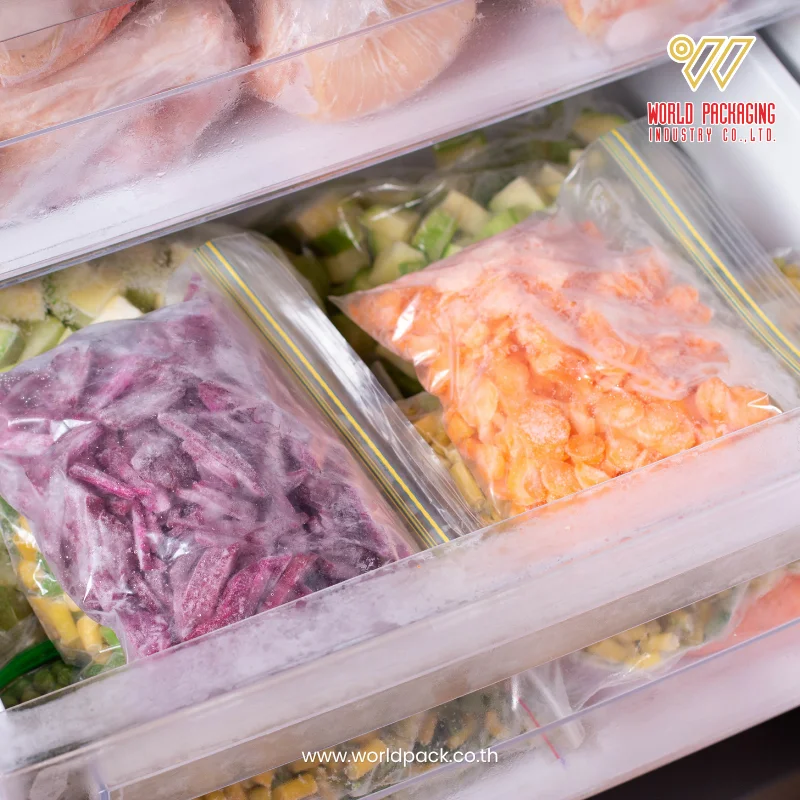
If you are looking for a reliable manufacturing partner for high-quality zipper bags for frozen food, World Packaging Industry offers custom plastic packaging solutions designed to meet international food-grade standards. Our packaging is manufactured with a focus on food-contact safety and product protection.
We use specially engineered laminated film structures designed to withstand sub-zero temperatures while maintaining flexibility, resisting cracking and brittleness, and providing strong, reliable seals. Combined with high-definition gravure printing technology, our packaging helps elevate your frozen food brand with attractive designs that stand out in the market and build lasting consumer trust.
Frequently Asked Questions (FAQ)
Can frozen food zipper bags be used in a microwave?
This depends on the plastic material and the manufacturer's specifications. Only bags explicitly labeled as microwave-safe should be used in a microwave. If permitted by the manufacturer, open the zipper or leave a vent for steam to escape before heating, following the product instructions.
Can ordinary clear plastic bags or standard cold-storage bags be used instead of laminated frozen food bags?
This is generally not recommended unless the bags are specifically designed and tested for frozen food applications. Ordinary plastic bags may lack the required low-temperature flexibility, puncture resistance, and barrier properties to protect food during extended frozen storage. Suitable laminated bags can provide enhanced durability and help reduce moisture loss and odor transfer, depending on their material structure.
How can you verify that custom-manufactured frozen food zipper bags meet food safety standards?
Request documentation demonstrating that the packaging is suitable for food contact, such as food-contact compliance declarations, relevant factory certifications, and migration test reports. Manufacturing certifications such as ISO, GHPs, or HACCP can provide additional assurance regarding quality and food safety management, but they do not independently establish that a specific packaging material is safe for food contact. Always verify that the documentation applies to the actual material and intended application.
What is the minimum order quantity (MOQ) for custom-printed frozen food bags?
The minimum order quantity depends on factors such as bag dimensions, material structure, printing requirements, and production setup. Contact the World Packaging Industry team for a customized quotation and an assessment of the minimum order quantity for your project.
Article Summary
Choosing zipper bags for frozen food with durable plastic materials, reliable low-temperature performance, and verified food-contact compliance is an important strategy for frozen food businesses.
The right packaging can help reduce bulging, tearing, and leakage during freezer storage and handling. It can also help preserve food quality, minimize product losses, reduce replacement costs, and strengthen consumer confidence in your brand.
If you are looking for a packaging partner, World Packaging Industry is ready to provide consultation and customized packaging solutions tailored to your business needs.
LINE: https://lin.ee/gDrTLlv
Phone: 02-897-1434